










Nicolás Correa achieves outstanding results with the MHAYA R&D project, funded by CDTI as part of the ‘Science and Innovation Missions’ programme. Once again, Nicolás Correa has excelled with the most innovative technological advances in the development of cognitive machine tools, consolidating its position as a benchmark in intelligent manufacturing.
Nicolás Correa, S.A. has successfully completed the MHAYA R&D project, a strategic consortium aimed at defining the industrial ecosystems of 2030 through the development of cognitive machine tools capable of learning and acting autonomously. The project is part of the ‘Science and Innovation Missions’ programme and is funded by CDTI.
As the consortium´s leading company, Nicolás Correa has driven the most significant technological advances and strengthened its position as a benchmark in intelligent manufacturing.
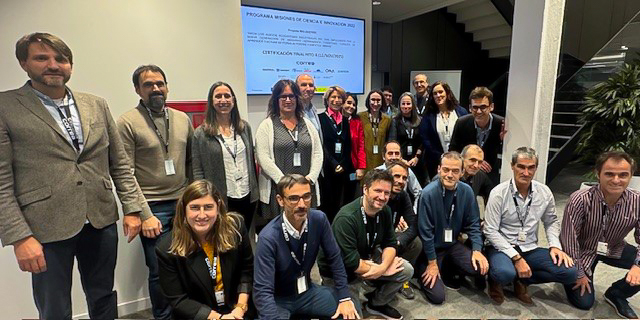
The project’s final closing meeting took place in November at Nicolás Correa’s facilities in Burgos, where all consortium partners gathered to review the results and validate the milestones achieved. This meeting highlighted the company’s coordinating and technological role within the project.
The Machine’s Brain: Adaptive Control and Dynamic Self-Adjustment
The foundation of the advances in productivity and precision lies in the development of unprecedented control intelligence, the true brain of the machine of the future. On one hand, a Dynamic and Continuous Self-Adjustment System has been created for the drives, enabling them to autonomously adapt to changing conditions of weight, inertia, and friction.
On the other hand, the Adaptive Position Control (APC) system has been developed, optimizing the balance between precision and productivity by dynamically adjusting control parameters throughout the entire working volume. This intelligence opens the door to production processes in which precision and productivity specifications can be customized for each operation and each individual part.
Revolutionary Productivity: 43% Reduction in Machining Time
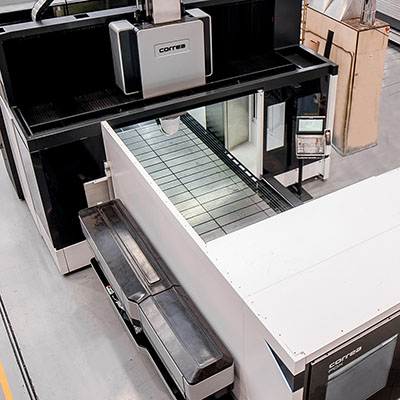
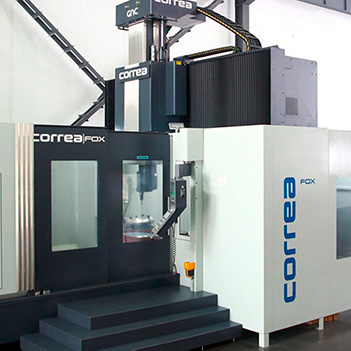
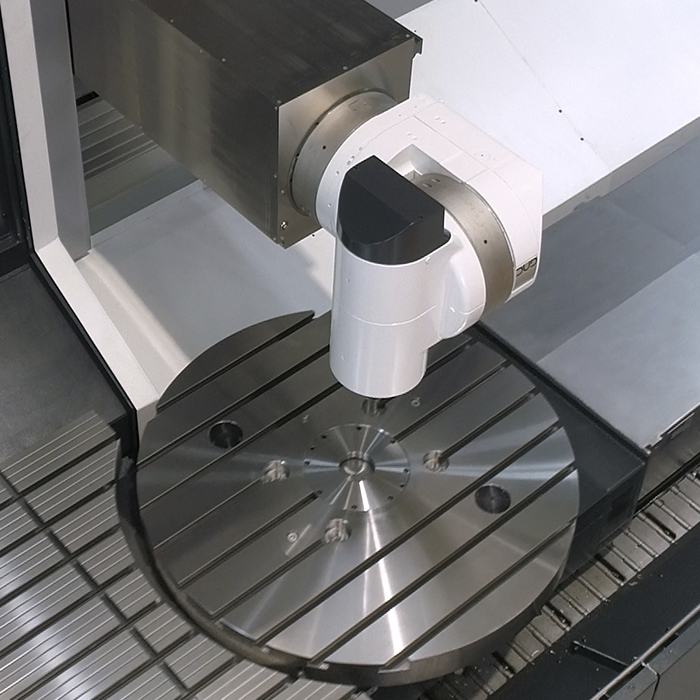
Leveraging the capabilities of Adaptive Position Control (APC), Nicolás Correa developed a Technology Demonstrator on an Axia milling machine with a moving column and horizontal ram. This demonstrator validated an innovative dynamic multiconfiguration system that adjusts crucial parameters such as acceleration and jerk in real time, adapting to the variable rigidity of the machine.
The result is a measurable leap in performance: in five-axis mould machining tests, the technology achieved a 43.59% reduction in total machining time. This extraordinary improvement was accomplished while keeping tracking errors within the strict values of ±20 µm. This innovation will enable customers to manufacture large-volume parts with unprecedented productivity, while maintaining and even improving the spatial accuracy of trajectories, even in the case of multi-axis movements.
Extreme Precision: Intelligent Thermal Compensation
In a second Technology Demonstrator, implemented on a Versa-W moving table milling machine for large parts, the objective was to validate thermal prescription algorithms. These algorithms intelligently compensate for the thermomechanical errors that affect precision in large-size machines.
The system has demonstrated exceptional effectiveness, achieving a reduction of up to 80% in volumetric thermal error. This innovation enables customers to strengthen their strategic position by meeting extremely tight machining tolerances on large, high-volume parts, which is a key competitive advantage in highly demanding sectors such as energy and aerospace.
Looking to the future
Nicolás Correa’s participation in the MHAYA project marks a turning point in the evolution of intelligent machine tools. The developments achieved reinforce the company’s technological position and open new opportunities in strategic markets that demand maximum productivity and precision. With the completion of milestone 4 of the project, and following the final meeting held in Burgos, Nicolás Correa reaffirms its commitment to innovation and to the industry of the future.
